Xenon Arc Lamp Exposure AATCC TM 169 Textile Weather Resistance Test
Test cycle to determine:
1. The test cycle is determined by the end-use influencing factors, especially the climatic conditions influencing factors. However, not all materials are affected by the same environment is the same. The results obtained from any one test cycle are not representative of other test cycles or other outdoor climate tests. Accelerated test factors obtained for one geographic location are not necessarily applicable to any other geographic location. However, some test cycles have been used to categorize similar climates with respect to test-related cycles.
2. The properties of the test material help to select the appropriate test cycle, including UV exposure, wetting, wetting time and temperature. The instrument must be equipped with a continuous spectral monitoring device to control irradiance at 340 nm to (0.35 ± 0.01) W/m2/nm, or 300 a 400 nm to (401 I.5} W/m2, unless otherwise specified. For textile materials, the following test cycle methods can be selected.
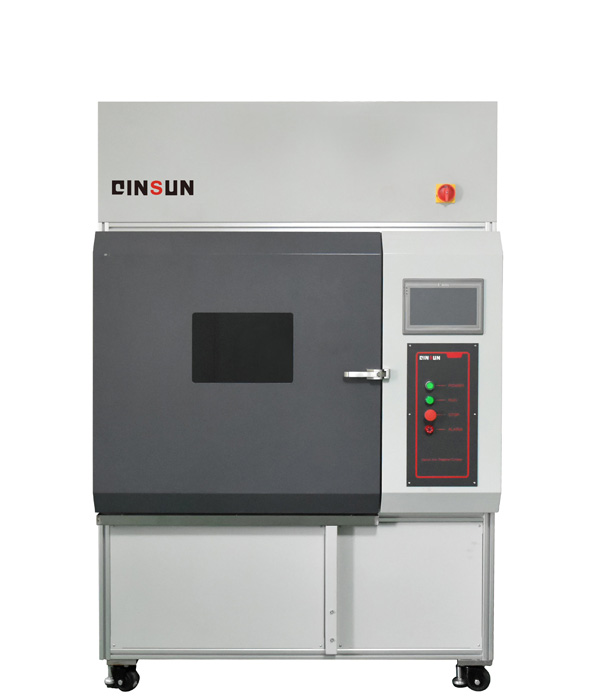
3. Method 1: This test cycle is used to simulate a subtropical climate, such as South Florida, 120min cycle, only 90min exposure, relative temperature of 70% ± 5%, alternating 30min of light and water spray, blackboard temperature 77 ℃ Shi 3 ℃ (170 ± 5).
Method 2: This test cycle is used to simulate a subtropical climate, such as South Florida, when the water supply system is restricted: 120min cycle, 60min exposure only, 70% relative humidity ± 5%, alternating 60min of darkness, blackboard temperature 77°C soil 3 ℃ (170°F ± 5°F), no water spraying.
5. Method 3: This test cycle was used to simulate a semi-arid climate, such as Phoenix, Arizona, with continuous light exposure, no water spraying, blackboard temperature 77 °C ± 3 °C (170 °F ± 50 °F), and relative humidity 27% ± 3%.


评论
发表评论